The Singer of Longing. From the Tupi name to poetry, the sabiá is remembered above all for its song; the link with longing and home comes from Brazilian literature.
Hear a clip
20-second clip, recorded in nature. In this recording: song.
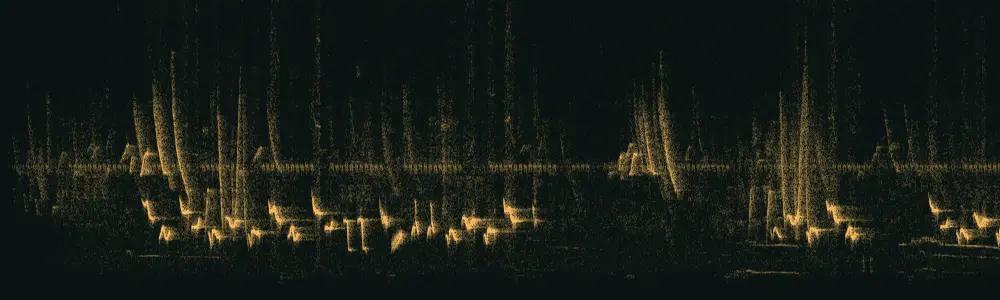
The sound drawn: the higher the line, the higher the pitch.
Brazil (poetry and national symbol) literature and art
The sabiá opens the Canção do Exílio (Song of Exile) by Gonçalves Dias (1843), a poem of longing for the homeland that does not name the species. A 2002 decree put the rufous-bellied thrush at the center of Bird Day, as the bird popularly held to be the national one.
Whoever listens to the sabiá is reminded of where their place is. There is beauty in missing something and in returning home within.
What it sounds like
A melodious, fluting song, long, with many variations, heard from more than 1 km away. It sings mainly in the breeding season, before dawn and at dusk.
The frequency of the song
Main frequency
2,595 Hz
Note
E7
Range
2,013 Hz–2,713 Hz
Rhythm
moderate
Tone
pure, whistled
Binaural tone
324.38 Hz
We measured this recording by computer, removing background noise. Canto Ancestral's binaural sound uses the bird's main note, brought to 324.38 Hz, close to the tone used in studies. Understand binaural beats.
For which moment
Calm, acceptance, love. Calm comes from the sound, fluting and melodious. Acceptance and love come from poetry, in which the sabiá sings of longing, love and the homeland. Sounds for anxiety.
Frequently asked questions
What is the spiritual meaning of this bird?
It depends on the people. Tupi (name): The name 'sabiá' is of Tupi origin. According to the writer Mouzar Benedito, it means 'singer', which suits a bird that sings until the small hours.
What does its song sound like?
A melodious, fluting song, long, with many variations, heard from more than 1 km away. It sings mainly in the breeding season, before dawn and at dusk.
What is the frequency of its song?
In the recording we use, the main frequency was 2,595 Hz, close to the note E7, with most of the sound between 2,013 Hz and 2,713 Hz.
Does this song help you relax?
Calm comes from the sound, fluting and melodious. Acceptance and love come from poetry, in which the sabiá sings of longing, love and the homeland. Studies link bird sounds to less stress, but none tested this species in particular.