In Sanskrit poetry, the kokilas (koels) announce spring and often accompany Kama, the god of love. In the Kokilasandesha, by Uddanda Shastri (15th century), a man far from his wife sends her a message by a koel.
The koel is traditionally much prized for its song, and the Manusmriti contains a rule that protects it. It is a frequent symbol of Indian, Pakistani and Nepali poetry.
A call from afar may be a promise of reunion. Do not let longing silence your voice.
What it sounds like
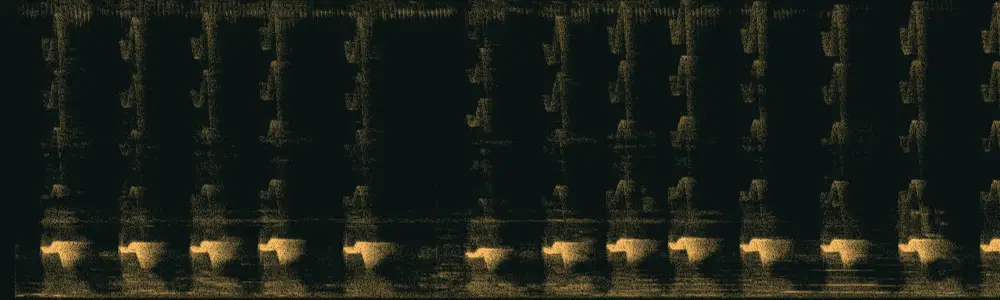
The male repeats a well-known 'koo-Ooo'; the female makes a shrill 'kik-kik-kik'. It is very vocal in the breeding season, from March to August in India.
The frequency of the song
Main frequency
1,453 Hz
Note
F#6
Range
1,324 Hz–1,733 Hz
Rhythm
slow
Tone
pure, whistled
Binaural tone
181.62 Hz
We measured this recording by computer, removing background noise. Canto Ancestral's binaural sound uses the bird's main note, brought to 181.62 Hz, close to the tone used in studies. Understand binaural beats.
For which moment
Love, expression, renewal. They come from tradition: the messenger of lovers (love), the prized song (expression) and the announcement of spring (renewal). Birdsong.
Frequently asked questions
What is the spiritual meaning of this bird?
It depends on the people. India (Sanskrit poetry): In Sanskrit poetry, the kokilas (koels) announce spring and often accompany Kama, the god of love. In the Kokilasandesha, by Uddanda Shastri (15th century), a man far from his wife sends her a message by a koel.
What does its song sound like?
The male repeats a well-known 'koo-Ooo'; the female makes a shrill 'kik-kik-kik'. It is very vocal in the breeding season, from March to August in India.
What is the frequency of its song?
In the recording we use, the main frequency was 1,453 Hz, close to the note F#6, with most of the sound between 1,324 Hz and 1,733 Hz.
Does this song help you relax?
They come from tradition: the messenger of lovers (love), the prized song (expression) and the announcement of spring (renewal). Studies link bird sounds to less stress, but none tested this species in particular.